Личный кабинет
KIU Lecturers from the "Znanie" Society Conducted an Intensive Course for Students in Belarus
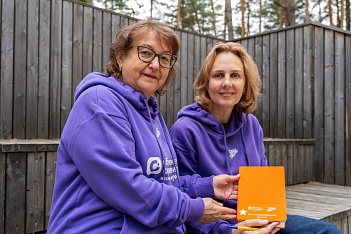
Associate Professors from the Faculty of Psychology and Pedagogy of KIU, lecturers from the "Znanie" Society, Nadezhda Vanyukhina and Margarita Filatova-Safronova, delivered a series of scientific and educational lectures for students at Yanka Kupala State University of Grodno.
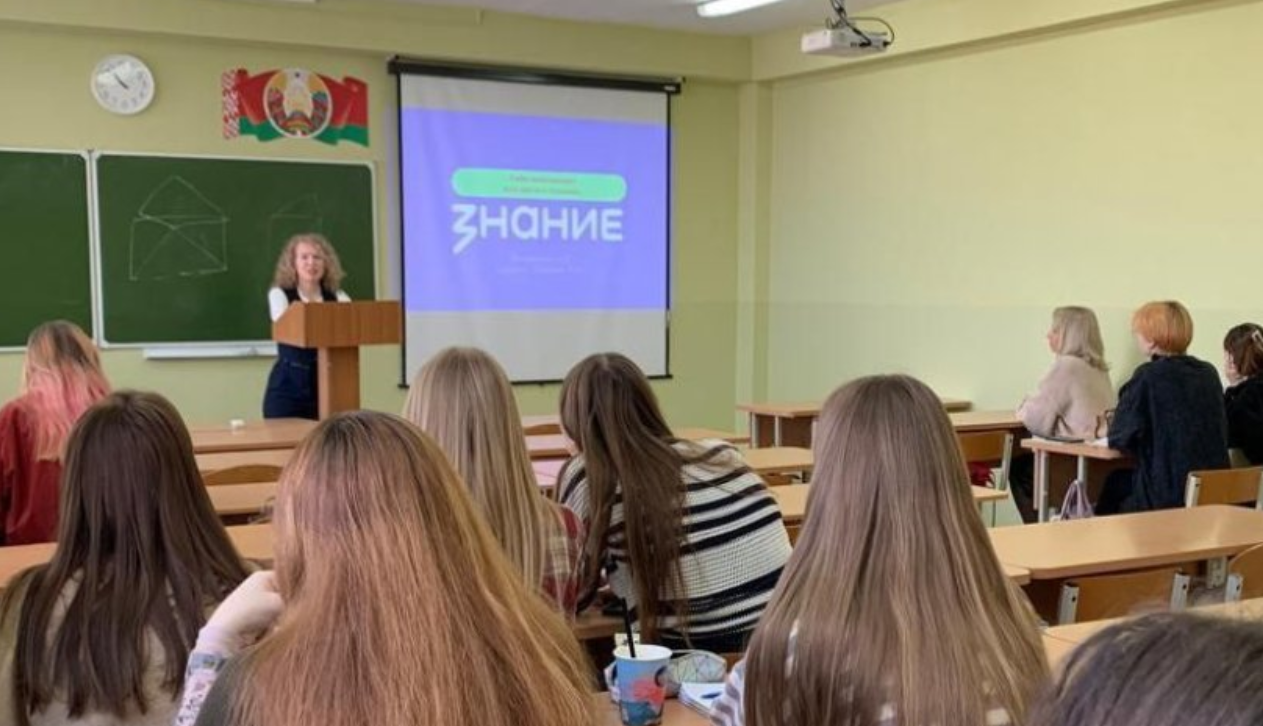
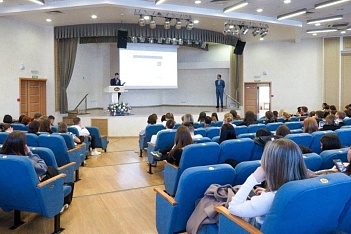
The event was held as part of the implementation of the Roadmap for the Youth Policy of Russia and Belarus for 2025–2027. During the intensive course, our experts delivered five lectures, with an audience of over 150 Belarusian students.
This event not only highlights the high professional level of KIU's teaching staff but also strengthens the university's academic ties on the international stage. The participation of our specialists in such projects aligns with KIU's mission of disseminating knowledge and innovative educational practices.
Nadezhda Vanyukhina noted that during the discussion on the topic "Development of Creative Thinking," the lecturers did not just share theoretical knowledge but also offered the listeners exercises to develop the ability to find non-standard solutions and ingenuity within their chosen professions.
"There is no universal advice for developing creative thinking, as this process is individual for each person. Our task is to propose exercises that help develop the necessary professional qualities for it. For example, we teach people to formulate their goals and requests competently because a clear thought is already the beginning of a solution. We also practice exercises where one needs to find non-obvious connections between completely different concepts—this is an excellent training for mental flexibility. And finally, a special task is to learn how to explain complex things through vivid and understandable images, be it psychological terms or any other abstract categories. Essentially, our work lies in helping a person unlock their creative potential through such targeted techniques," emphasized Nadezhda Vanyukhina.
During the lecture "Time Management or How to Get Everything Done?" the lecturer emphasized that it is impossible to do everything, but it is possible to do the main things. According to her, there are several key rules for effective time management. First of all, before starting work, it is recommended to analyze its overall volume and create a clear plan of action. One should inform colleagues and friends in advance not to be disturbed during busy periods and minimize unexpected guest visits during work hours.
For maximum productivity, it is important to create a suitable environment: isolate oneself from external distractions, turn off the TV, and switch the phone to silent mode. No less important is concentration on a single task, as this is the key to its high-quality execution. At the same time, one should work at a steady pace, as rushing often leads to mistakes and a decrease in the quality of the result.
Margarita Filatova-Safronova addressed an important topic in her lecture "Remember Everything, or What Do We Know About Alzheimer's Disease?" She explained that the first warning signs of Alzheimer's disease are often impairments in short-term memory, when a person starts constantly forgetting recent events or just-received information. Gradually, difficulties with finding words in conversation, problems with planning, and solving simple everyday tasks may be added. Often, the affected person gets lost in familiar places, confuses dates, and experiences noticeable mood swings, becoming apathetic or irritable. As the disease progresses, the difficulties worsen, affecting long-term memory and the ability for self-care.
A key role in preventing the disease is played by constant mental activity, such as reading, solving crosswords, or learning new things. Regular physical activity, which improves blood supply to the brain, is also extremely important. A balanced diet with an abundance of vegetables, fruits, and omega-3 fatty acids is also necessary. As the lecturer emphasized, doctors strongly recommend maintaining social contacts and monitoring key health indicators: blood pressure, cholesterol, and blood sugar levels.
Knowledge.Lecture Hall is an educational project of the "Znanie" Society, within which lectures on a wide variety of topics—from microbiology and physics to the development of soft skills—are held in every region of the Russian Federation. Each federal subject can launch the specific initiative that is important for its residents. During the lectures, young people can ask questions to experts and discuss current issues.


 ПРЕД
СЛЕД
ПРЕД
СЛЕД